








 Quick Answer
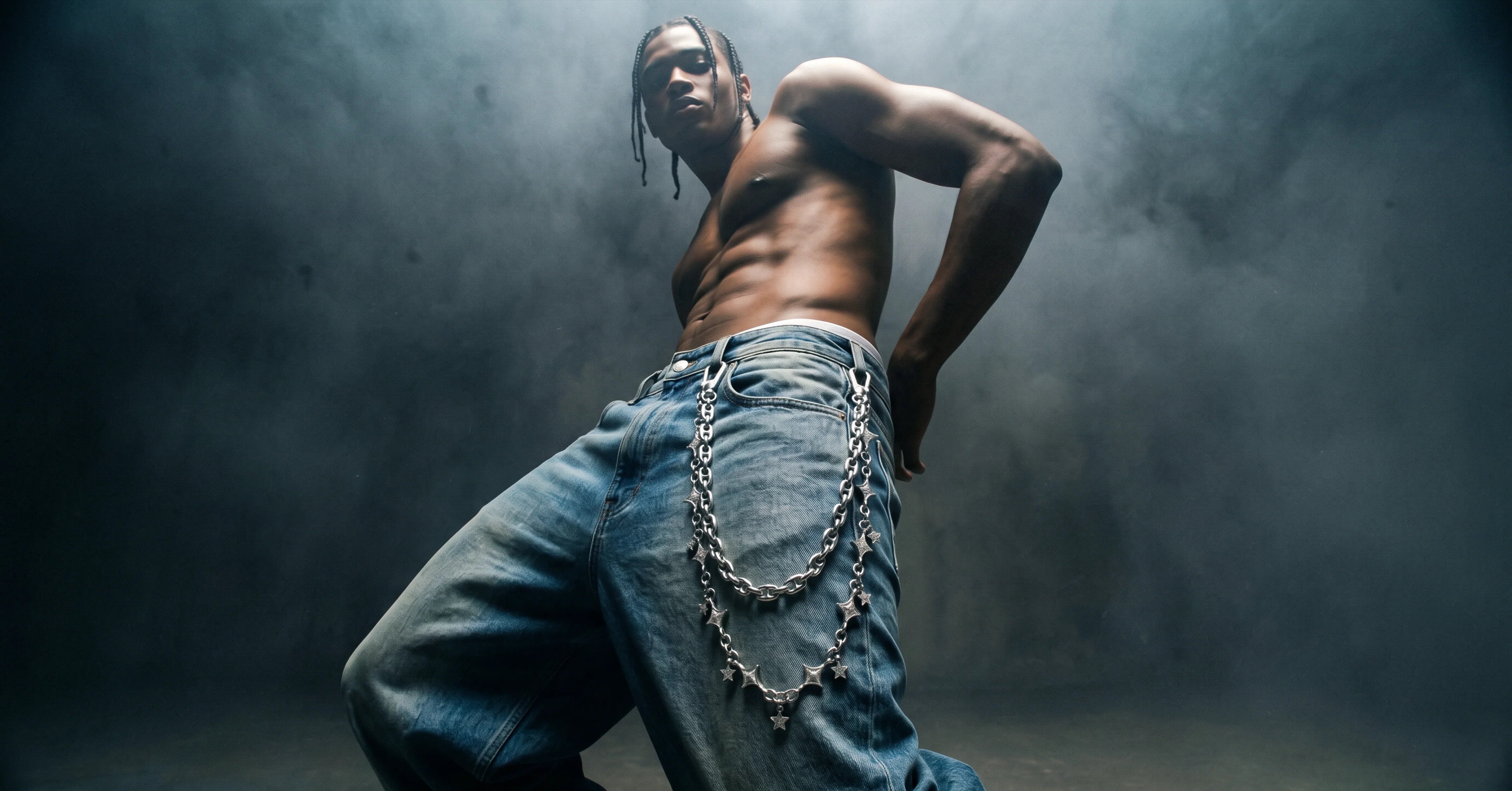
A wallet chain, also called a pants chain, is a metal chain that clips between your wallet and your belt loop or waistband. It started as security hardware in biker and workwear culture, passed through punk and 90s skate scenes, and now works as a streetwear accessory worn with or without a wallet. It's back in rotation in 2026 for a mechanical reason, not just a nostalgic one: baggy silhouettes are back, and a wallet chain only works when pants have drape space. This guide covers the hardware, how to attach and style one, how to choose length and material, and Aporro's top picks.
What Is a Wallet Chain?
A wallet chain has three parts, and knowing them matters more than it sounds. There's the wallet-side clasp, which clips to a D-ring or metal loop on the wallet. There's the chain body, which can be built in Cuban, link, or rope structures. And there's the pants-side clasp, which attaches to a belt loop, waistband button, or jeans loop.
One hardware detail separates chains built for actual wear from chains built for product photos: the swivel. A clasp mounted on a swivel rotates as you move, so the chain stays flat when you sit down and stand up. A fixed clasp can't rotate, so the chain twists on itself and kinks over a day of wear. If you've ever seen a wallet chain that looks permanently corkscrewed, that's why.
"Wallet chain" and "pants chain" describe the same product from two directions. Wallet chain is the functional name, from the accessory's original job. Pants chain is the styling name, for the growing number of people who wear one with nothing attached to it at all.
The function came first. Wallet chains show up in the 1940s and 50s with motorcycle riders and truckers, people who spent hours seated and moving, which is exactly the condition that ejects a wallet from a back pocket. Punk took the hardware in the late 70s as part of its raid on workwear and biker gear. Skateboarding adopted it in the 90s for the same reason bikers did, because tricks throw wallets, and kept it because it looked right with the era's silhouette. By the early 2000s it was fully mainstream.
Are Wallet Chains Still in Style in 2026?
Yes, and there's a cleaner way to understand why than pointing at the Y2K revival.
The wallet chain's entire trend history tracks one variable: pants width. The chain peaked in the baggy-denim 90s and early 2000s. It died almost completely in the 2010s, and the cause wasn't taste changing at random. Slim and skinny fits left the chain no drape space; a chain against a slim pant lies flat and tight like a wire, the arc disappears, and the whole visual point of the accessory goes with it. When silhouettes swung back to relaxed, wide, and oversized in the 2020s, the chain had room to hang again, and it returned with the pants.
Two more forces stacked on top of that. Hip-hop styling stopped treating chains as neckwear only and extended them across the whole body, waist included. And oversized fits genuinely benefit from the chain visually: a big, boxy silhouette reads as one undifferentiated mass, and a chain arcing off the hip adds a vertical line and a point of movement that breaks the mass up.
So the honest answer is yes, in style, and likely to stay in style for exactly as long as relaxed silhouettes do. When pants go slim again, expect the chain to hibernate again. Buy it because it fits how you dress now, not because it's permanent.
How to Attach a Wallet Chain
The mechanics take thirty seconds. Doing it so the chain looks right and doesn't damage your pants takes two more pieces of knowledge.
Step 1 — Wallet side.
Clip one end to your wallet's D-ring or metal loop, then seat the wallet in your back or side pocket. Don't force it fully down; the wallet should sit naturally so the chain exits the pocket cleanly.
Step 2 — Pants side.
Clip the other end to a belt loop or your waistband.
Step 3 — Check the arc.
The chain should hang in a visible U between its two anchor points. A chain pulled taut across the hip is the most common styling mistake there is; a straight line reads as a leash, an arc reads as intentional. If the chain is tight, move the anchor points closer together or go up a length.
Now the part most guides skip. A belt loop is a strip of fabric bar-tacked at both ends, and it is the weakest point in this whole system. Light and mid-weight chains are fine on a loop. A genuinely heavy chain swinging off one belt loop all day works that stitching constantly, and denim loops do eventually tear out. For heavy chains, anchor to the waistband button or the sturdiest attachment point available, and match the chain to the fabric: denim and canvas carry weight, lighter trousers deform under it.
How to Style a Wallet Chain Denim and an oversized tee.
The foundational setup. The chain's job here is to add one vertical line and one moving element to a boxy silhouette. Let it arc off the hip and let it swing; the movement is the point.
Waist-only, no wallet.
Clip both ends to belt loops and wear the chain as pure waist jewelry. This is the fastest-growing way to wear one, and everything above still applies, especially the arc rule.
As part of a full chain system.
This is where wallet chains fit modern streetwear jewelry as a whole. The waist chain echoes the neck chain: keep metal tones consistent across zones, so a gold-tone Cuban at the neck pairs with a gold-tone chain at the waist, and let the widths differ so the two don't compete. If you're building the neck side of that system, our Cuban link chain guide covers width, length, and layering there.
On which side to wear it: tradition says dominant-hand side, because that's the back pocket the wallet lived in. Modern styling treats it as a balance question instead. If your watch and bracelets stack on one wrist, run the chain on the opposite hip so the outfit doesn't list to one side.
Wallet Chain Length Guide
A wallet chain is a pendulum, and length sets both the depth of the arc and how much the chain moves when you walk. That's the real decision you're making.
| Length | How it hangs | Best for |
| 18–21 in | Shallow arc, close to the hip, minimal swing | Regular fits, subtler styling |
| 24–28 in | The standard drape, clear U-shape, natural movement | Jeans and everyday streetwear fits |
| 30+ in | Deep drop, heavy visible swing | Oversized and baggy silhouettes |
| Length | How it hangs | Best for |
| 18–21 in | Shallow arc, close to the hip, minimal swing | Regular fits, subtler styling |
| 24–28 in | The standard drape, clear U-shape, natural movement | Jeans and everyday streetwear fits |
| 30+ in | Deep drop, heavy visible swing | Oversized and baggy silhouettes |
If you're between sizes, the fit of your pants decides it: the wider and longer the silhouette, the more chain it can carry. Confirm the exact lengths offered on each product page.
Best Wallet Chain Materials
Stainless steel is the daily-wear default for a reason with actual chemistry behind it: the chromium in the alloy forms a passive oxide layer on the surface that continuously protects the metal underneath. That's why steel shrugs off sweat, rain, and daily contact without rusting or fading, and why it's the right call for a chain that lives at your hip and takes friction all day.
925 sterling silver is 92.5 percent pure silver alloyed with harder metals, because pure silver is too soft to hold a link shape. It runs brighter and whiter than steel and it ages differently: the patina silver develops over time is a surface layer of silver sulfide from contact with air, and it polishes off completely. Tarnish on real silver is a maintenance fact, not damage.
Brass is the workhorse base of streetwear jewelry. It's hard enough to hold crisp link detail, it takes plating well, and unplated it develops a warm, vintage tone as it ages. Plated brass gives you gold-tone finishes at accessible cost, with the same honest trade-off as any plated piece: the finish is a wear layer, so keep it dry and it lasts years.
Aporro's Best Wallet Chains — Top Picks

The Thorned Cuban Wallet Chain is the presence pick: Cuban link structure with thorn detailing that adds texture you can see across a room. It's the chain for fits where the waist is meant to be noticed.
The G-Link Wallet Chain is the opposite move, a clean industrial link with no decoration to date it. This is the one that goes with everything you own and works in the waist-only style as easily as with a wallet.
The WONG Double Dragon Miami Cuban Chain is the statement tier, a Miami Cuban structure with dual dragon detailing for anyone whose chain is the centerpiece of the fit.
If you'd rather build the rotation in one move, the Thorned Cuban & G-Link Wallet Chain bundle pairs the bold pick and the minimal pick, which between them cover essentially every outfit.
FAQ
Can wallet chains be worn without a wallet?
Yes. Clip both ends to belt loops and it functions as waist jewelry. The styling rules don't change; the chain still needs a visible arc between its anchor points.
Are wallet chains heavy for daily wear?
Less than you'd expect, because the weight rides at your hip rather than your neck and your legs don't feel it the way your neck feels a heavy chain. The real weight consideration is the anchor point: heavy chains belong on a waistband or reinforced loop, not a single bar-tacked belt loop.
Do wallet chains go with all pants?
They work best where there's drape space: jeans, cargos, relaxed and oversized fits. On slim pants the arc flattens against the leg and most of the visual effect disappears. If your wardrobe runs slim, a shorter chain in the 18 to 21 inch range keeps the look proportional.
What side should I wear a wallet chain on?
Tradition says the dominant-hand side, matching the back pocket the wallet historically lived in. Modern styling treats it as visual balance instead: run the chain opposite your wrist stack so the jewelry weight is distributed across the outfit.
Will a wallet chain damage my jeans?
A light or mid-weight chain, no. A heavy chain swinging off one belt loop for months will fatigue the stitching, because belt loops are the weakest part of the system. Anchor heavy chains to the waistband and the problem goes away.
Can wallet chains be styled with other jewelry?
Yes, and they work best as part of a system rather than an isolated piece. Match metal tones between neck, wrist, and waist, vary the widths so pieces don't compete, and treat the wallet chain as the waist-level echo of whatever is happening at the neckline.
Final Takeaway
A wallet chain earns its place by what it does to the whole outfit: it adds a line, an arc, and a point of movement to silhouettes that would otherwise read as static. Pick the length off your pants, not off a product photo, since the fit decides how the chain hangs. Start with the wallet chains collection to compare structures and lengths side by side.
Share:
Jewelry 101: How to Design Your Perfect One-of-a-Kind Piece
Cuban Link Chain Guide — What It Is, Why It’s Popular & Best Picks for Men 2026